
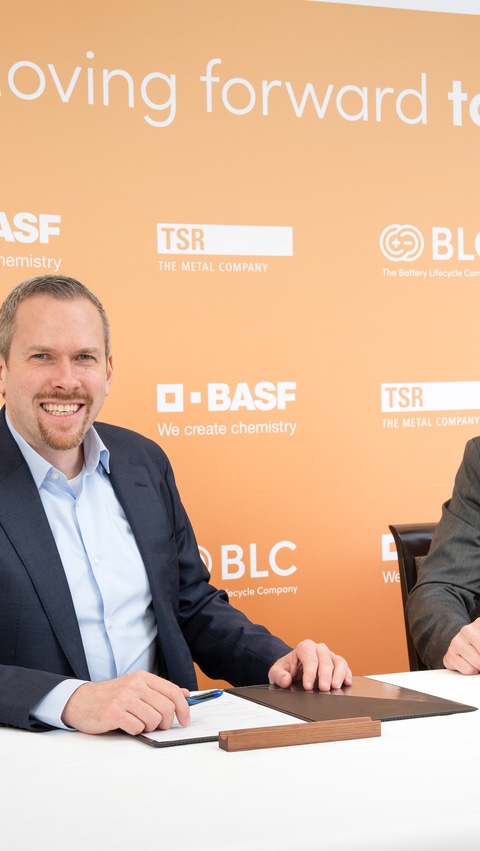
A strong partnership: Daniel Schönfelder, President of BASF’s Battery Materials division, and Marc Affüpper, Managing Director of the TSR Group, sign an agreement to collaborate on the recycling of electric vehicle batteries in Europe.
Photo: BASF
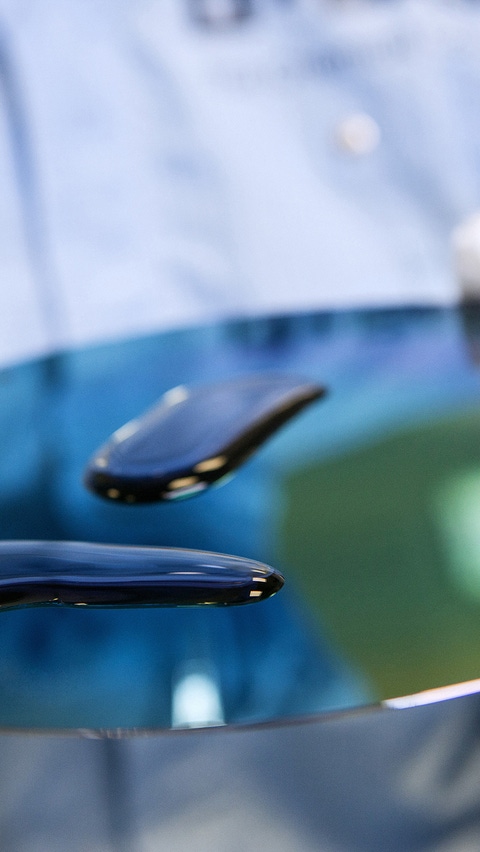
New electronic grade ammonium hydroxide plant in Ludwigshafen in support of wafer cleaning, etching and other precision processes in semiconductor manufacturing.
Photo: BASF


Quarterly Statement
Q1 2026

Reporting


Cooperation for battery recycling in Europe

BASF and TSR Group are joining forces to accelerate large-scale battery recycling for electric vehicles in Europe.

Learn more


BASF constructs new plant in Ludwigshafen to strengthen European chip industry

For the production of ammonium hydroxide (NH4OH EC)

Learn more

BASF – Belgium

Solutions for your industry

Chemistry for a sustainable future

Zonlicht in een bos 
Green transformation
Our ambition is to be the preferred chemical company driving our customers' green transformation. Through a diversified portfolio and innovative products and processes, we aim for profitable growth and long-term value creation. 

Latest news items

Der umspritzte Ring im Silikonkörper der neuen Babyflasche von Comotomo besteht aus dem BASF-Polyphenylsulfon Ultrason® P 2010, eingefärbt mit einem spezifischen Blau aus dem Colorant Chromatics™-Sortiment von Avient.
Foto: BASF
Trade News | June 15, 2026

Infant care manufacturer Comotomo uses Avient color-matched Ultrason® in next-generation baby bottle
 

Comotomo, a leading Korean manufacturer of innovative infant care products, now uses colored Ultrason® P 2010 in its next-generation baby bottle to achieve the desired color without compromising safety. The bottle’s silicone body incorporates an over-molded ring made of the BASF polyphenylsulfone Ultrason® P 2010 (PPSU) as a high-quality base polymer combined with a specific blue color using Avient’s Colorant Chromatics high-temperature color formulation expertise for color concentrates and pre-colored solutions. This combination provides the bottle with full rigidity and ensures a safe feeding experience for infants as the colored PPSU is approved for food contact according to all important standards like FDA, FC and GB.
In 1931 BASF filed the patent for the manufacturing of Polyisobutene, which was sold under the product name Oppanol. The picture shows the cooling unit of the Oppanol plant at Ludwigshafen site in 1952.
Photo: BASF
Trade News | June 8, 2026

BASF introduces Oppanol® N PLUS for next-generation batteries – 95 years of innovation with polyisobutene

BASF introduces Oppanol® N PLUS, a new high-performance binder for the next generation of electric vehicle (EV) batteries. The product will be presented at The Battery Show Europe in Stuttgart, Germany, from June 9 to 11, 2026, in hall 5, booth A20.
Scientist examines young transgenic corn plants
Wheat from and for the future
The wheat plants that grow in the greenhouse of the BASF Innovation Center in Ghent may well be the answer to the increasing demand for food. And all this thanks to their unique genetic code.
Turning a corner - Towards a new mobility
The future of mobility: changing direction
Issue 14 of Creating Chemistry magazine is dedicated to the megatrend of mobility. Explore how the future of mobility is being envisioned globally. 
Hand filled with little plastic beads
Alliance to End Plastic Waste
Together with 30 other companies, BASF has joined forces to put an end to plastic waste in the environment.